
A mineral that locks away carbon.
Technology developed at MIT, converts seawater or brine into a high-purity mineral, then binds CO₂ into a stable carbonate.
Two steps, one solid product.
Seawater and desalination brine are rich in dissolved minerals. Minerali's proprietary process precipitates one of these minerals at high purity. Exposed to air or flue gas, that mineral binds CO₂ and converts to a carbonate that remains stable on geological timescales.
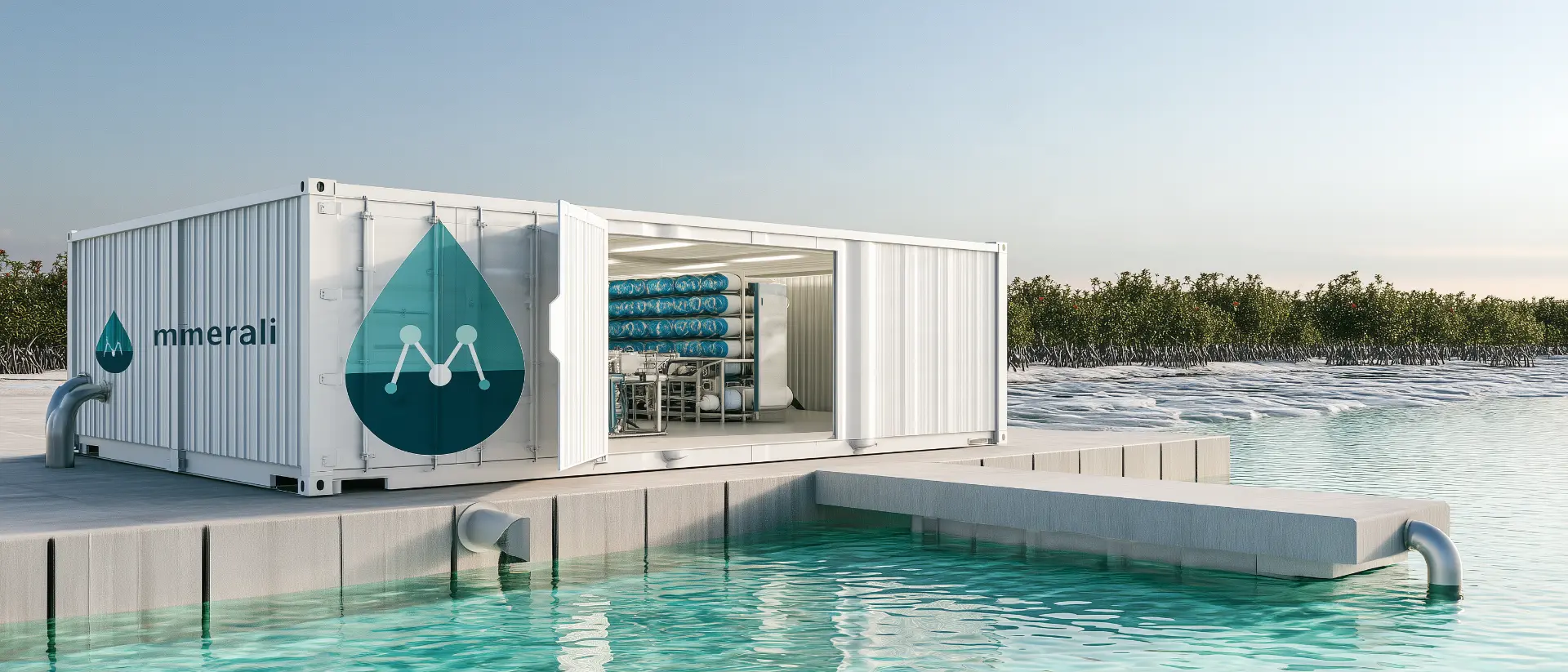
A flow-through tank, not a refinery.
Seawater / brine in
Pumped through a modular flow-through tank.
Mineral formation
The mineral precipitates inside the tank.
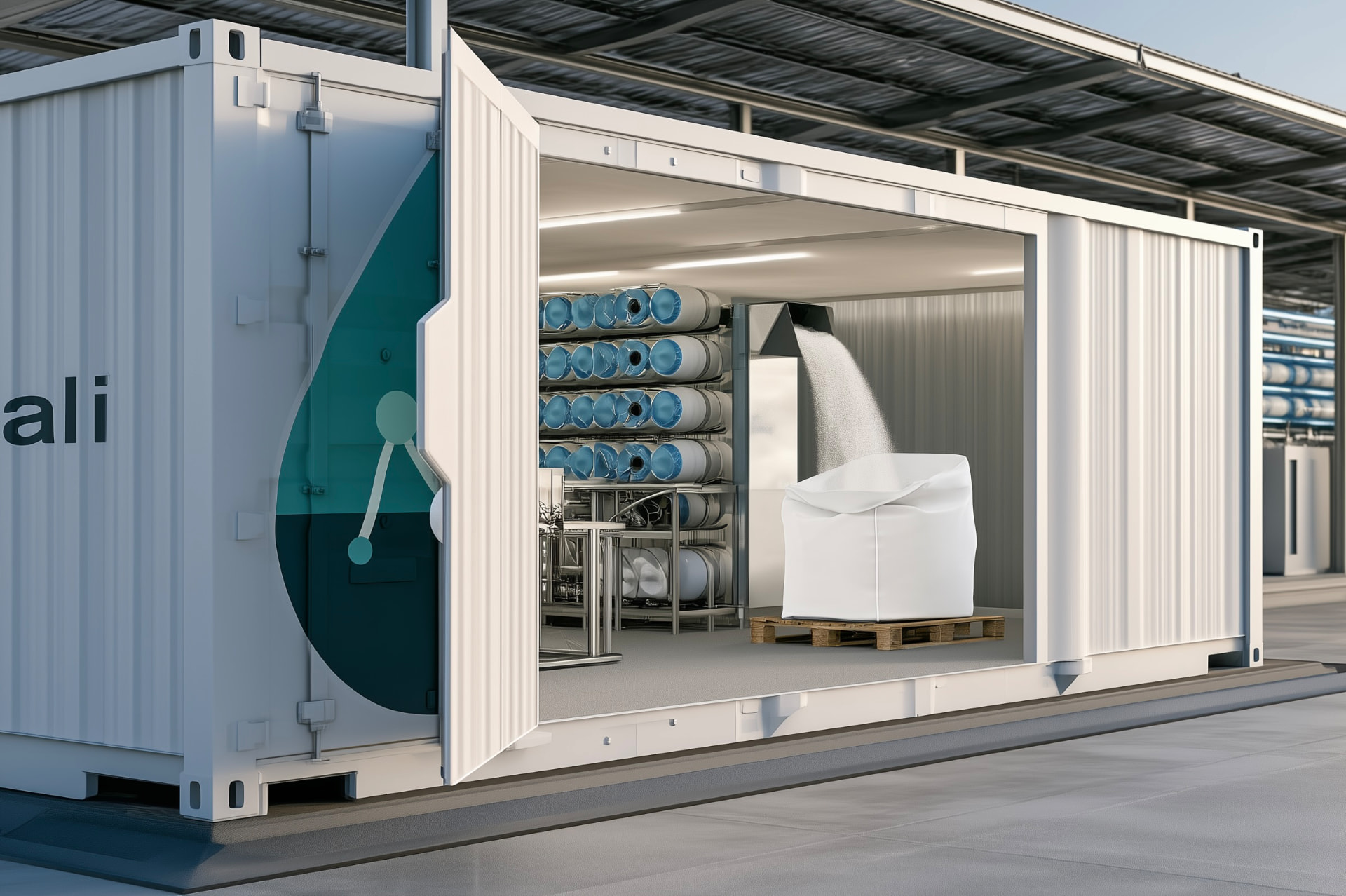
Mineral collected
Accumulated solid drains from the tank base and water returned.
CO₂ mineralization
The mineral carbonates into a stable solid in air or flue gas.
One mineral out. Clean water back.
Water is pumped in, passed through the Minerali tank system, and returned to the same body or facility stream it came from. The only thing removed is a solid mineral that holds captured carbon. No new chemicals, concentrated waste streams, or stored gases are released to the ocean.
Confirmed and projected.
Confirmed
- Process validated at MIT
- Mineral formed from real ocean water
- Carbonate product verified by lab analysis
Projected
- Extended continuous pilot run
- Parallel modular units at host sites
- Mass-verifiable permanent storage